Table of Contents
Since the introduction of the UK Online Safety Act, a large number of myths have spread online about what the law does, how it affects everyday internet use, and whether privacy tools like VPNs are being restricted or banned.
Much of this confusion comes from oversimplified headlines, social media speculation, and a misunderstanding of how internet regulation actually works.
This article breaks down the most common myths about the Online Safety Act, explains what is factually correct, and clarifies where VPNs and other privacy tools actually fit into the picture.
The complete context behind VPNs and the Online Safety Act
Myth 1: The Online Safety Act Allows Mass Surveillance
Reality: The Online Safety Act does not introduce mass surveillance of internet users.

The Act focuses on platform responsibilities, not on monitoring individual browsing behavior. It does not require ISPs or the government to inspect the contents of encrypted internet traffic or track users’ activity across websites.
Encryption, HTTPS, and VPN traffic remain protected in the same way they were before the Act.
Myth 2: VPNs Are Banned or Restricted Under the Online Safety Act
Reality: VPNs remain legal and unrestricted.
The Online Safety Act does not ban VPN software, block VPN connections, or penalize users for using VPNs. VPNs continue to be widely used for legitimate purposes such as privacy, security, and remote work.
Claims that VPNs will be outlawed under the Act are incorrect. While there have been recent legislative discussions in early 2026 regarding potential age assurance for VPN services specifically, the government and Ofcom have clarified that a ban on VPN apps is not being considered.
The legal position of VPN use
Myth 3: VPNs Automatically Bypass All Online Safety Measures
Reality: VPNs do not override platform rules or legal requirements.
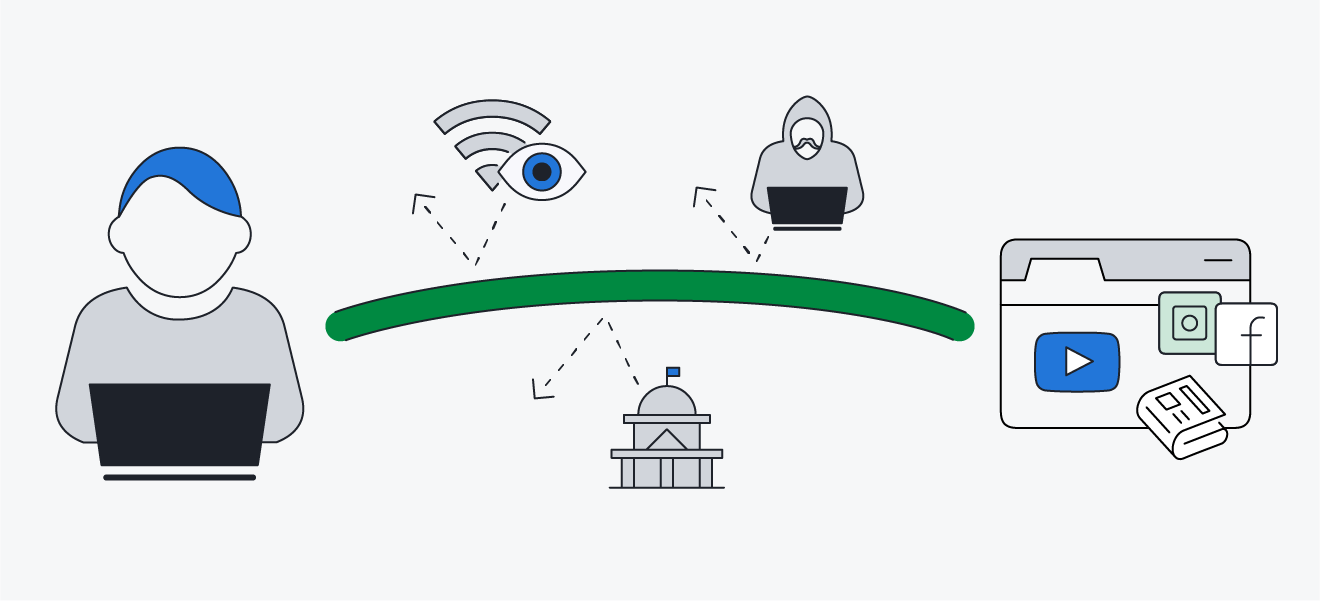
A VPN changes how traffic is routed at the network level, but it does not bypass:
- platform content moderation
- account-based restrictions
- age verification systems
- service-level enforcement
Using a VPN does not exempt users from platform rules or legal obligations.
Myth 4: Age Verification Is Implemented Through ISPs
Reality: Age verification is enforced by platforms, not ISPs.

Under the Online Safety Act, platforms are responsible for implementing age assurance measures. These checks typically rely on account systems, verification providers, or identity confirmation processes, not on IP addresses or ISP filtering.
A VPN does not bypass these systems.
Myth 5: ISPs Will Block Most Websites by Default
Reality: Widespread ISP-level blocking is not mandated by the Act.

The Online Safety Act does not require ISPs to block large portions of the internet. Any network-level filtering typically occurs through optional parental controls, DNS filtering, or local network policies.
VPNs can sometimes affect ISP-level filtering, but this depends on how filtering is implemented.
Myth 6: Using a VPN Makes You Legally Anonymous
Reality: VPNs provide privacy, not legal anonymity.

A VPN masks your IP address from websites and encrypts traffic between your device and the VPN server. It does not make illegal activity legal or prevent lawful investigations.
Platforms can still associate activity with accounts, and legal processes remain unchanged.
Myth 7: The Online Safety Act Targets Individual Users
Reality: The Act targets companies, not users.

Enforcement powers under the Online Safety Act are aimed at online platforms and service providers that fail to comply with safety obligations. Individual users are not the primary subjects of enforcement.
Why These Myths Persist
Many myths arise because:
- technical concepts are simplified or misrepresented
- VPNs are often portrayed as bypass tools rather than privacy tools
- regulatory language is complex and easily misunderstood
Clear explanations help prevent unnecessary fear and unrealistic expectations.
Practical Guidance for Users
If you are concerned about how the Online Safety Act affects you:
- understand the difference between network-level privacy and platform rules
- use VPNs for legitimate privacy and security reasons
- do not assume VPNs override age checks or moderation
VPNs remain useful tools, but they are not a workaround for regulation.
Frequently Asked Questions
Does the Online Safety Act allow surveillance of browsing history?
No. The Act does not mandate browsing surveillance.
Are VPNs illegal under the Online Safety Act?
No. VPNs remain legal to use.
Can VPNs bypass age verification?
No. Age verification is enforced at the platform level.
Will ISPs block VPN traffic?
The Act does not require ISPs to block VPNs.
Final Verdict
The Online Safety Act has been widely misunderstood.
It does not ban VPNs, enable mass surveillance, or turn ISPs into content police. VPNs remain legal privacy tools, but they do not bypass platform rules, age verification, or legal obligations.
Separating fact from myth helps users make informed decisions without unnecessary concern.
Last updated: 2026