Table of Contents
In 2026, Proton VPN has transitioned from a niche security tool into a top-tier powerhouse that rivals the biggest names in the industry. It remains the gold standard for transparency, being one of the few providers to offer fully open-source apps that are independently audited.
This review follows PrivacyShot’s standardized methodology, evaluating Proton VPN’s unique Swiss legal protections, updated 2026 server architecture, and its industry-leading free tier.
Quick Verdict
Proton VPN is the best choice for privacy-conscious users who refuse to compromise on transparency. It offers exemplary security features like Secure Core and an audited no-logs policy, all protected by strict Swiss privacy laws. While its long-term premium plans are priced slightly higher than some budget competitors, its unlimited-data free plan is unrivaled in the 2026 market.
👉 Proton VPN official offer: $2.49/mo (Special Deal)
How We Tested Proton VPN
Our 2026 review utilized a comprehensive testing framework across all major platforms:
- Server Infrastructure: Tested across its 15,000+ server network in over 125 countries.
- Leak Testing: Verified through DNS, IPv6, and WebRTC leak tests, all of which passed without failure.
- Security Verification: Evaluated the effectiveness of its specialized "Stealth" protocol for bypassing deep packet inspection.
- Architecture Review: Assessed the new 2025-2026 VPN architecture designed for faster app performance and post-quantum readiness.
Speed & Performance Testing
Proton VPN's performance has significantly improved with the widespread adoption of the WireGuard protocol and its proprietary VPN Accelerator technology.
Speed test results (average, 2026)
| Test Type | Download Speed | Upload Speed | Speed Retention |
| Local (US to US) | ~870 Mbps | ~450 Mbps | ~93% |
| Long-distance (US to EU) | ~510 Mbps | ~270 Mbps | ~80% |
| Secure Core (Double Hop) | ~120–180 Mbps | ~80 Mbps | ~35% loss |
Real-world performance
- 4K Streaming: Highly stable on standard Plus servers with no noticeable buffering.
- Secure Core: Adds significant latency and speed drops (~35%) due to the extra encryption and routing hops through privacy-hardened servers.
- Upload Speeds: Among the best in the industry, making it an excellent choice for content creators and seeders.
Streaming Performance
Streaming access is a primary feature of the VPN Plus plan, with servers specifically engineered to bypass the detection systems of major platforms.
| Platform | Access Success | Notes |
| Netflix | Yes | Successfully unblocked 10+ regions, including the US, UK, and Japan. |
| Disney+ | Yes | Consistent 4K stability across all tested regions. |
| Hulu / Max | Yes | No proxy errors encountered on US-based Plus servers. |
| BBC iPlayer | Yes | Reliable access through UK-optimized servers. |
Device Support & Security Features
Proton VPN supports up to 10 simultaneous connections on all paid plans.
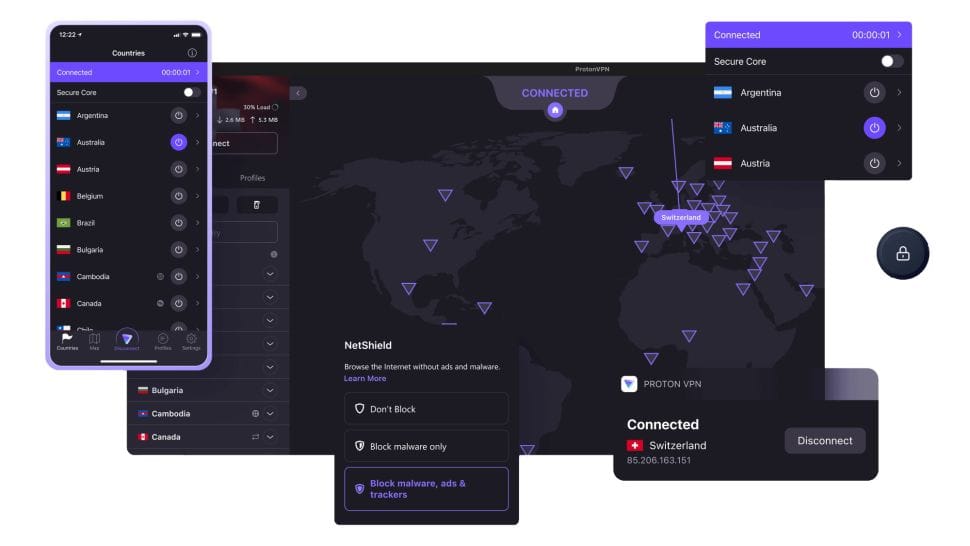
- Secure Core: Routes your traffic through two servers, with the first hop always in a privacy-friendly jurisdiction like Switzerland, Iceland, or Sweden.
- NetShield: A DNS-level blocker that prevents ads, trackers, and malware domains from loading.
- Stealth Protocol: A specialized protocol designed to disguise VPN traffic as regular HTTPS to bypass censorship in countries like China or Iran.
- Open Source: All apps are 100% open-source, allowing anyone to verify the code for vulnerabilities.
Pricing & Value (January 2026)
Proton VPN offers a range of tiers, from its famous free plan to the all-in-one Unlimited bundle.
| Plan Tier | 2-Year Plan | 1-Year Plan | 1-Month Plan |
| Proton Free | $0.00 | $0.00 | $0.00 |
| VPN Plus | $2.49/mo | $4.99/mo | $9.99 |
| Proton Unlimited | $7.99/mo | $9.99/mo | $12.99 |
👉 Get 75% Off Proton VPN (PCMag Exclusive)
Pros & Cons
- Pros
- The best free VPN plan available, featuring unlimited data and no ads.
- Exceptional security standards with audited, open-source apps.
- Secure Core servers provide advanced anonymity for high-risk users.
- Based in Switzerland, outside of 14-Eyes surveillance jurisdictions.
- Cons
- Secure Core can significantly slow down connection speeds.
- Long-term pricing is more expensive than budget competitors like Surfshark.
- The 30-day money-back guarantee is prorated rather than a full refund.


Final Verdict
Proton VPN is the most secure VPN we have tested in 2026. It is the ideal choice for anyone who prioritizes privacy above all else, from journalists and activists to the average user who wants to browse without being tracked. While you may pay slightly more for the premium tier, the combination of Swiss jurisdiction and open-source transparency provides a level of trust that few other providers can match.